
Agriculture Management System in 2023 – Why Do You Need It
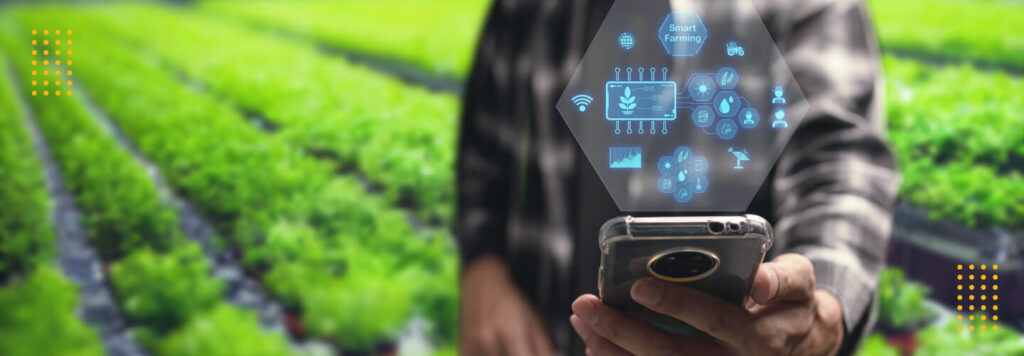
What is an agriculture management system? Why is management important in agriculture? What are agricultural best management practices?
For centuries, farmers have been gambling on external factors such as weather, rainfall patterns, and soil properties to gauge a good yield. Today, several global trends are however influencing food security and agricultural sustainability, prompting farmers the need to adopt advanced systems.
As the demand is growing continuously with the global population expected to reach nearly 10 billion by 2025, farmers are aggressively looking for technological alternatives to their operations. Now, on a few farms, especially in developed countries, machinery drives along the field, equipped with GPS technologies and maps measuring fertilizer and pesticide applications and the yield of a harvest. AI-based sensors and IoT sensors also sit on farm machines and equipment collecting thousands of data points.
However, unlike tech-driven industries, very little innovation has taken place in agriculture. Additionally, there hasn’t been anything to indicate that food scarcity and hunger will not be an issue in the coming years. Improving farm management is one of the ways to overcome these challenges and increase the efficiency of agriculture production.
Challenges Impacting Global Agriculture and Food System
Significant developments and innovations in agriculture helped feed more people, causing a decline in hunger and the number of undernourished people. But, in recent times, the impact of climate change through extreme weather and shocks caused by the COVID-19 pandemic has exposed vulnerabilities in the global food system.
- Climate change: Agriculture suffers as a result of climate change including rising temperatures and weather extremes that threaten our food system.
- Food waste: While millions of people cannot afford a quality meal seven days a week in many countries, tons of food is being wasted after being harvested. This is due to a lack of resilience and poor inventory and supply chain management.
- Water and land scarcity: Changing rainfall patterns along with rapid urbanization threaten food production and security in many parts of the world. Thus, this increases the need for efficient resource management in agriculture.
- Low access to innovation: Small farms produce nearly half of the food consumed in low- and mid-income countries, especially in Asia and Africa. However, extreme weather, crop diseases, and uncertain markets are posing threats to these smallholders.
- Supply chain disruptions: The current war against Ukraine and the pandemic threw global food supply chains in turmoil. Moreover, the war has severely impacted the supply of nitrogen fertilizer.
Is Agriculture Management System a Key to Future Food System?
With data-collection capabilities, new technologies are bringing monumental shifts in agricultural operations. More data blurs the line between farming, science, and technology, thus making agriculture more precise and lucrative.
Best management practices for agriculture involve practical measures that farmers can take to reduce the amount of fertilizers, pesticides, and other pollutants entering the water resources. Agriculture production management today is entering into a new era where a farmer’s decisions are supported by highly sophisticated farm management software and systems.
Let’s look at some of the advantages of an agriculture management system that are expected to boost production and meet future food demands.
Greater Capabilities for Electronic Record-keeping and Tracking
The use of sensors and GPS systems in farm machinery and equipment has ensured a large collection of data in agriculture. An agriculture management system helps keep the records updated electronically, enabling better control of operating equipment.
With efficient tracking capabilities, the system allows farmers to track planting, irrigation, and fertilization schedules in a centralized place. The data can further be shared with any worker or team member which offers more accurate and comprehensive reporting capabilities over traditional approaches.
Farm Optimization Through Comparison
The availability of historical and present farm records in an agriculture management system offers new opportunities for analysis. With these records, agricultural companies can calculate and compare certain data such as net profits, operational capabilities in fields, workforce requirements, etc. This allows farmers to find weak spots in the system and eliminate them with immediate action.
Improved Management of Inventory and Financials
A farm management system provides an overview of stock, and sales and purchases can be done on time accordingly. Tracking the harvest inventory in just a few clicks, agribusinesses can single out profitability per crop as well as field management practices.
The system also simplifies complex finance management resulting in improved cost savings and revenue cycles. Moreover, enhanced inventory management and analysis of profitability by crop reduce losses and give complete control of farm finances including payables and receivables.
Better Supply Chain Management
Traceability in the food supply is significantly gaining momentum among both consumers and agriculture businesses. The farm management system offers user-friendly traceability features that help farmers track their products from farm to table.
In case of recall of a complaint, users can easily pull up the record and information in seconds to take immediate action. Transparency in the supply chain further aids in offering quality assurance of the produce.
Agriculture Management System: What Should You Look For?
When choosing an agriculture management system, it is crucial to identify the areas of need that the system can address. First and foremost, it is important to check if the system houses data in the cloud as it has a lower risk of failing or becoming corrupted as compared to a local storage solution.
A simple user interface is also a must. A user-friendly platform that offers seamless navigation enables the adaptability and ease of integration for team members in agricultural companies. It is also important to look for an agriculture management system that provides data in real-time to maximize efficiency and control over the process.
FarmERP is a farm management software that meets the needs of farms of every size. Trusted by agritech businesses, FarmERP has the expertise to provide comprehensive and tailored solutions to boost farm production efficiency. Interested in finding out more? We are here to help – all you have to do is get in touch with us.