
How Technology is Revolutionising Crop Planning and Yield Prediction
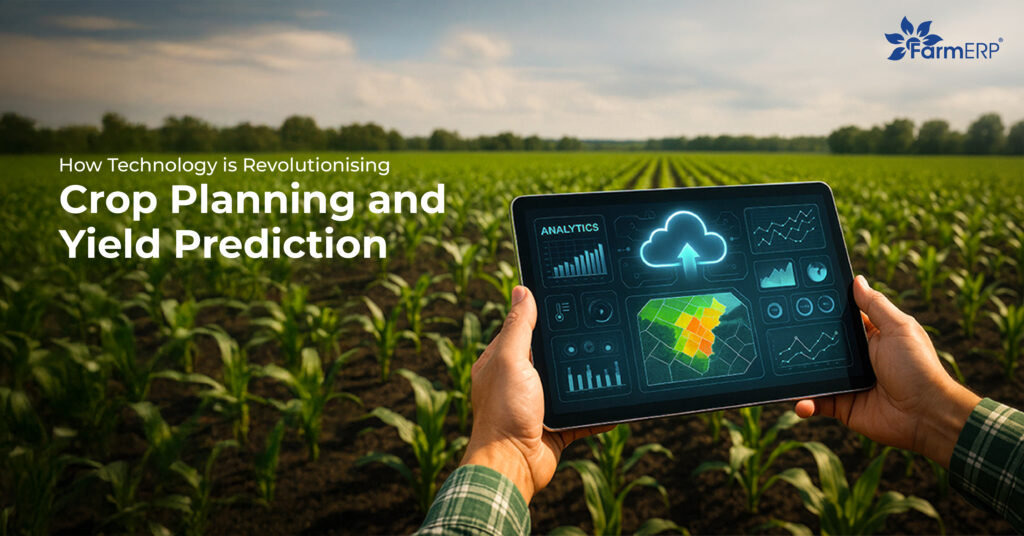
The difference between a profitable season and a loss-making one often comes down to foresight. In the face of climate volatility, stringent compliance standards, and fluctuating market demands, guesswork no longer cuts it.
Enter the era of smart planning, where technology drives every decision, and systems are in place not just to execute, but to predict. From crop Planning in agriculture to accurate crop yield prediction, digital transformation is no longer aspirational. It’s operational.
Why Traditional Planning Models No Longer Work
Until recently, most crop planning was done using spreadsheets, field notes, or past experience.
While this may work for small-scale operations, for multi-site, multi-variety agribusinesses managing exports, processing, or contract farming networks, it’s simply not scalable.
Challenges agribusinesses face today:
- Lack of real-time data during planning
- Inability to forecast accurately due to climate unpredictability
- Poor integration between planning, procurement, and logistics
- Regulatory risk due to insufficient traceability
Digital planning and forecasting are not just modern, they’re essential.
What Crop Planning Means in an Agribusiness Context
Unlike traditional farming, agribusinesses manage complexity across value chains, be it for raw produce, processed goods, or integrated contract grower models.
Crop Planning in agriculture at this level involves:
- Planning multiple crop cycles across regions and seasons
- Synchronising supply with buyer demand and shelf life
- Aligning resource allocation with business forecasts
- Ensuring traceability from plot to packhouse
This isn’t basic scheduling, it’s a strategic operation that impacts revenue, quality, and compliance.
Why Yield Prediction Is Now Critical to Strategy
Forecasting yield isn’t just useful, it’s fundamental. Whether it’s for export contracts, capacity planning in processing units, or investment decisions, businesses need a reliable view of expected output.
Modern tools enable crop yield prediction by using:
- Remote sensing and drone-based imagery
- AI models that learn from historical and real-time crop data
- Weather pattern correlations and soil health indicators
- Disease and pest progression mapping
Integrating Technology into Crop Planning
Digitising your planning process allows for dynamic, responsive agriculture operations.
With an intelligent crop management plan, agribusinesses can:
- Build planting calendars at a macro and micro level
- Integrate agronomic data with inventory and finance
- Generate alerts for deviations from expected growth patterns
- Automate resource allocation based on sowing schedules
- Track activity execution against plan in real time
A good plan isn’t just accurate, it’s actionable and adaptable.
How Agribusinesses Use Data-Driven Plans
Here’s how different segments of the agrifood value chain are benefiting:
- Exporters align harvesting with container booking and shipment cycles
- Processors sync incoming supply with production schedules to reduce wastage
- Farmer Producer Organisations (FPOs) use aggregated plans for collective bargaining and credit facilitation
- Greenhouse operators predict production peaks and align them with high-demand windows
Across all cases, the use of an intelligent crop management plan reduces overproduction, improves traceability, and safeguards margins.
Key Features of Crop Planning in Software
Adopting enterprise-level crop management systems like FarmERP gives agribusinesses the tools they need to operate at scale.
Key capabilities include:
- Multi-location and multi-crop planning modules
- Integration with finance, HR, and inventory
- Mobile app access for remote teams and field staff
- Scenario planning and yield simulation tools
- API-ready integration with drones, weather stations, and ERP stacks
This ensures planning isn’t siloed, it’s connected across every business unit.
Addressing Implementation Challenges
While the benefits are clear, agribusinesses often face:
- Resistance to change among field teams
- Incomplete historical data for training AI models
- Integration complexities with legacy systems
These can be resolved through:
- Role-based user training
- Phased module-wise implementation
- Using hybrid models that work online and offline
- Partnering with solution providers who understand agriculture deeply
When implemented well, digital systems not only enhance control, they elevate decision-making at the CXO level.
Final Thoughts
The business of agriculture is no longer limited to what happens on the farm. It’s about operational predictability, quality assurance, and sustainable scaling.
And for that, data must drive decisions. FarmERP brings that edge.
With decades of domain expertise and intelligent tools designed for scale, we help you turn data into direction, and ambition into action.
Let’s plan better, grow stronger, and move forward together.